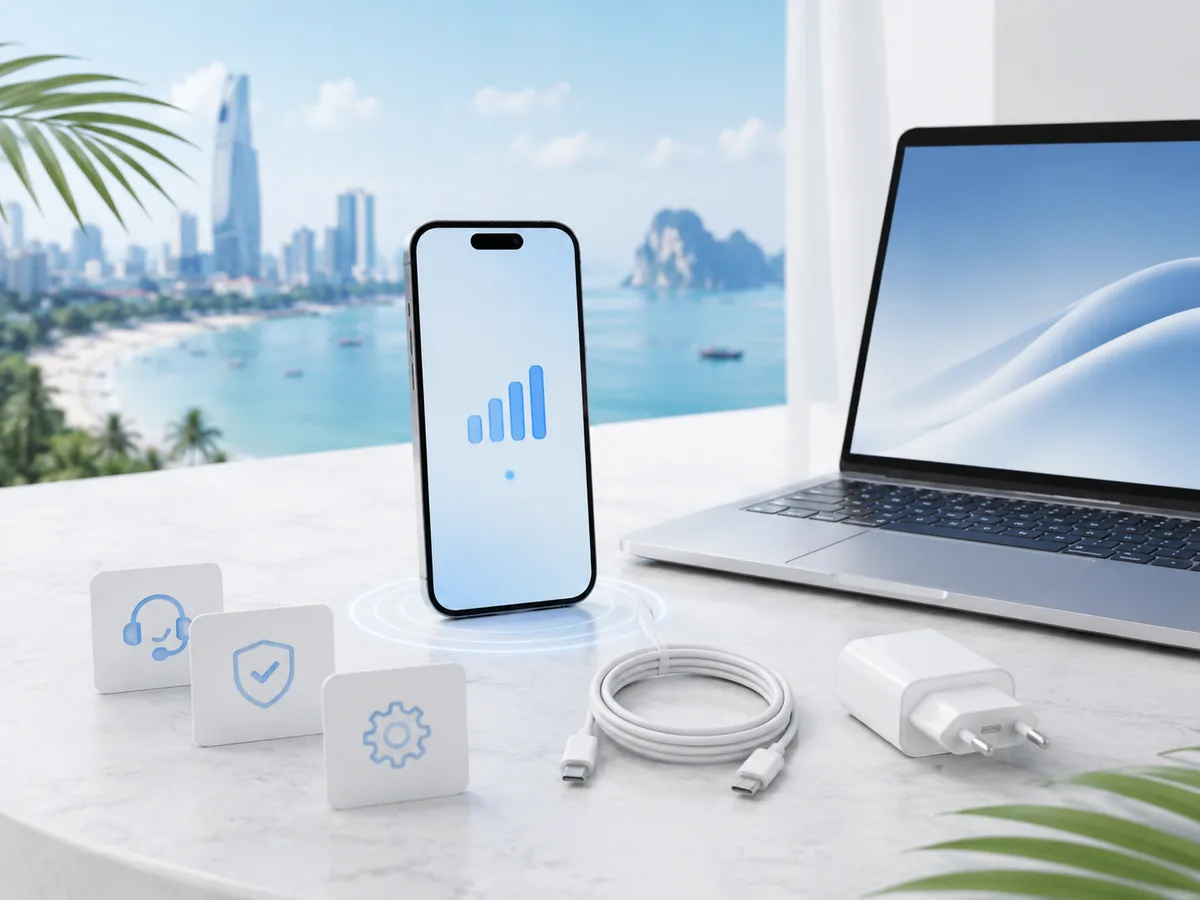
Internet in Vietnam is needed immediately: to call a taxi, open a map, translate a message, write to a landlord, check an address, pay for a service, find a café, or resolve a work issue. That’s why it’s better not to leave connectivity for "later." In the first 24 hours after arrival, weak internet can turn any small task into unnecessary stress.
Good news: there are many options. You can buy a physical SIM, activate an eSIM, temporarily use roaming, or rely on Wi-Fi. Bad news: there’s no universal solution. Everything depends on the length of your trip, the city, your phone, work, and whether you need a local number.
Note: If you work online, don’t plan your life solely around Wi-Fi in your accommodation. It’s better to have a backup mobile internet connection.
SIM, eSIM, or Roaming
For a short trip, an eSIM might be the fastest option: activate it before departure or right after arrival, and the internet is already working. This is convenient if your phone supports eSIM and you don’t need a local number for calls or service registrations.
A physical SIM is suitable for those staying longer, wanting a local number, or preferring to buy connectivity locally. You can usually find it at the airport, carrier stores, shops, or local vendors. Before buying, clarify how much data is included, how to check the balance, how to top up the plan, and what happens after the data package expires.
Roaming is convenient as an emergency option, but for a month-long stay, it’s usually more expensive. You can keep it for the first few hours until you buy a local SIM.
Do You Need a Local Number?
If you’re visiting for a couple of weeks, you can manage with just internet. But for longer stays, a local number is often useful: for deliveries, communication with landlords, service providers, local shops, and sometimes banking or utility apps.
Also, check which messengers the people you’ll interact with use. In Vietnam, different communication channels may be preferred, and sometimes the issue isn’t calls but where it’s more convenient for someone to respond.
Where to Buy Connectivity
The airport is the fastest option but not always the most cost-effective. In the city, there may be more choices and better deals. If buying a SIM from a small vendor, ask them to test the internet on your phone immediately, show you how to top up, and explain how to check the remaining data.
If purchasing an eSIM online, ensure your phone supports eSIM and isn’t carrier-locked. Save the instructions beforehand because without internet, opening an email with a QR code can be inconvenient.
Note: Don’t accidentally delete the eSIM profile. Some providers may limit reinstallation.
Internet for Work
If you’re working from Vietnam, check connectivity not just for speed but also stability. For calls, file uploads, video editing, CRM work, or development, what matters isn’t a flashy speed test but reliable connectivity throughout the day.
In your accommodation, ask about the provider, router location, whether there’s a dedicated line or shared Wi-Fi for the building, if you can reboot the router yourself, and what to do if issues arise. If internet is critical, find a nearby coworking space or café with good Wi-Fi in advance.

What to Do If the Internet Works Poorly
First, check the basics: balance, data limit, network mode, APN settings, phone reboot, and signal strength in the specific room. Sometimes the issue isn’t the plan but poor signal penetration inside the building.
If you can’t resolve it yourself, a phone, computer, or internet specialist might help. Such tasks usually fall under household services: setting up eSIM, phone, router, laptop, home internet, or account recovery.
On Naidu, such offers are logically found in services, computers and internet, and electronics if you need a phone, router, cable, adapter, or other device.
What to Check Before Buying
Before paying for connectivity, ask a few questions.
- Does the plan work nationwide or only in specific zones?
- How much data is included and for how long?
- Is there a speed limit after the data cap?
- How to top up the plan.
- Whether passport registration is required.
- If tethering to a laptop is allowed.
Conclusion
Connectivity is one of the first things to set up in Vietnam. You don’t need to choose the perfect plan right away, but it’s important to have working internet from day one. For a short trip, an eSIM or tourist SIM will suffice. For a month or longer, a local number, backup mobile internet, and knowing where to get tech help are usually more practical.