
Monthly accommodation is a separate market between tourist bookings for a couple of nights and long-term rentals for a year. In Vietnam, this is especially noticeable: one option may look great in photos but turn out to be inconvenient for living, working, or handling daily tasks.
If you're coming for a month, wintering, or a trial move, the goal isn't always to find the 'perfect forever home.' More often, you need a place where you can live comfortably, understand the city, handle daily tasks, and not lose money on an unsuitable option.
Note: The price per day and the price per month are not the same. Accommodation may have different conditions for monthly rentals: deposit, utilities, cleaning, electricity, water, and internet.
Hotel, Homestay, Apartment, or House
A hotel is convenient for the first few days: reception, cleaning, straightforward check-in, and minimal daily tasks. But living in a hotel for a month can be expensive or inconvenient, especially if there's no kitchen, washing machine, or proper workspace.
Homestay often offers a more homely atmosphere and can be more cost-effective. But it's important to understand the rules beforehand: guests, kitchen, quiet hours, cleaning, laundry, parking, common areas, and relationships with the hosts.
Apartments are a convenient option for a month: kitchen, washing machine, workspace, and more privacy. But this is where you should carefully check the details: internet, noise, utilities, deposit, condition of appliances, and the neighborhood.
A house for a month can be cost-effective, but not all owners want to rent for such a short term. Sometimes the minimum term is three or six months. If you find a monthly option, clarify the deposit return conditions especially carefully.

Neighborhood Matters More Than Beautiful Photos
Beautiful photos won't show how convenient it is to live in the neighborhood. Before paying, check what's nearby: store, pharmacy, laundry, café, gym, beach, stops, parking, coworking space, market, or hospital. If you don't ride a bike, this is especially important.
Check the neighborhood in the morning, afternoon, and evening. In Vietnam, a street can be quiet at noon and noisy at night. There might be construction, karaoke, a busy road, a market, or a bar nearby.
If you work from home, check not only the internet but also the workspace. A desk, chair, outlets, lighting, air conditioning, and quietness can be more important than a beautiful view.
What to Ask Before Paying
Before paying, ask specific questions. Don't be afraid to seem nitpicky: it's better to clarify beforehand than to argue later.
Ask if electricity, water, internet, and cleaning are included. Find out the deposit amount, return conditions, check-out rules, cleaning cost after stay, whether guests are allowed, parking availability, how the washing machine works, and who fixes appliances if they break.
Note: If you're told 'everything is included,' still clarify what exactly 'everything' means. Sometimes electricity is separate, and the air conditioner can significantly affect the final amount.

Why It's Better Not to Pay for a Month Without Inspection
Sometimes it's unavoidable, especially during peak season. But if possible, it's better to first see the accommodation in person or request a video tour. The video should show not only the room but also the entrance, view from the window, bathroom, kitchen, washing machine, air conditioner, and the street nearby.
If you're booking remotely, save the correspondence, terms, and payment confirmations. Don't send large sums to strangers without verification.
What You'll Almost Always Need After Moving In
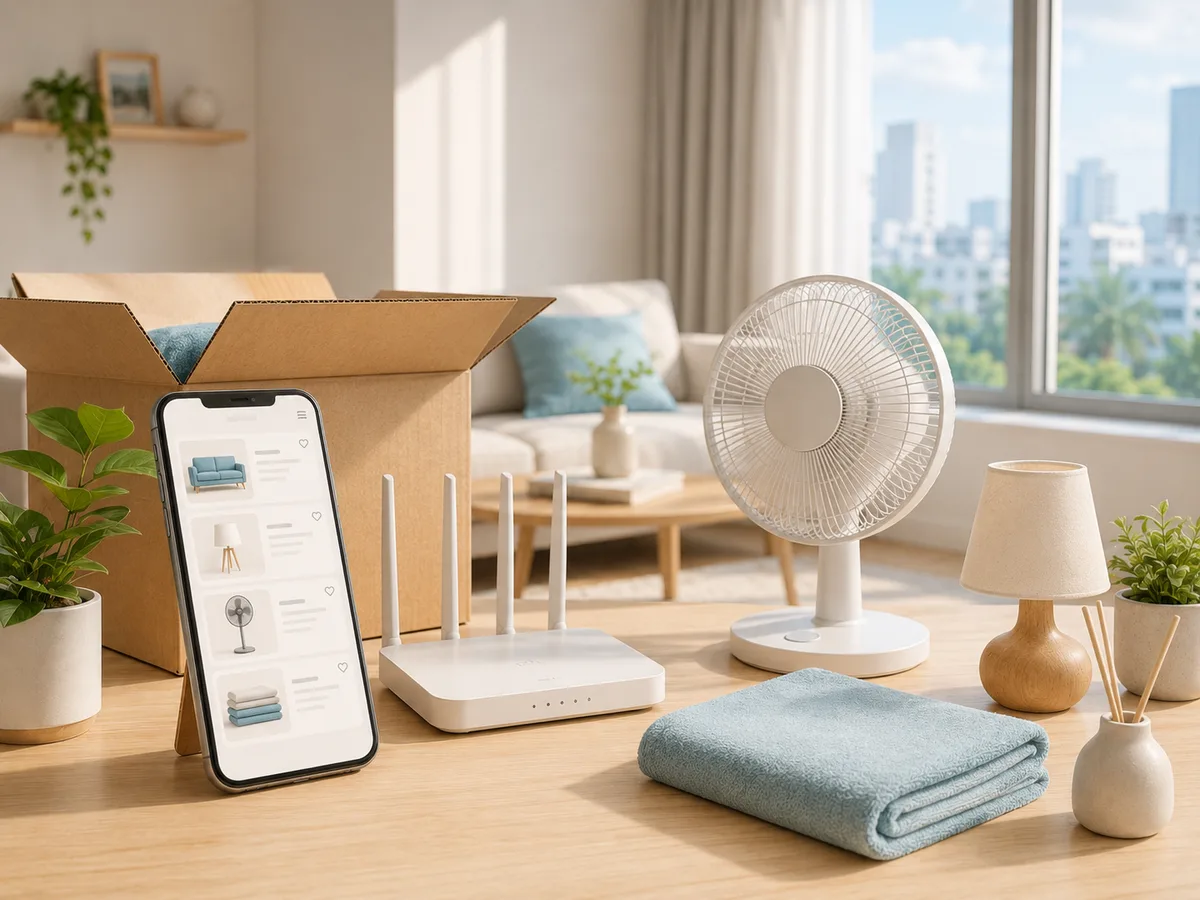
Even good accommodation rarely covers all daily tasks. After moving in, you might need an extension cord, router, fan, work chair, dishes, drying rack, towels, containers, cleaning supplies, minor appliance repair, cleaning, or transport rental.
This is why accommodation should be considered not separately but as part of a daily system. The place might be good, but without transport, internet, or normal services nearby, life can become more difficult.
Where to Search and How to Compare Options
Accommodation can be found through Booking, Airbnb, Facebook, chats, acquaintances, local websites, and ads. Each channel has its advantages. Aggregators offer convenient booking, chats can provide local options, acquaintances help reduce risk, and ads are useful for comparing categories and cities.
Naidu can be useful not only for accommodation itself but also for tasks around it: home goods, cleaning, repairs, internet, transport rental, electronics, and nearby services.
Short Checklist for Monthly Accommodation
- Check the neighborhood at different times of the day.
- Clarify utilities and deposit.
- Check the internet and workspace.
- Learn the rules for guests, cleaning, and check-out.
- Record a video of the accommodation's condition upon moving in.
- Save correspondence and payment terms.
- Don't buy unnecessary items before the first week of stay.
Monthly accommodation in Vietnam is best chosen calmly. You don't have to take the first beautiful option. It's much more important to understand the neighborhood, conditions, real expenses, and how you'll handle daily tasks every day.